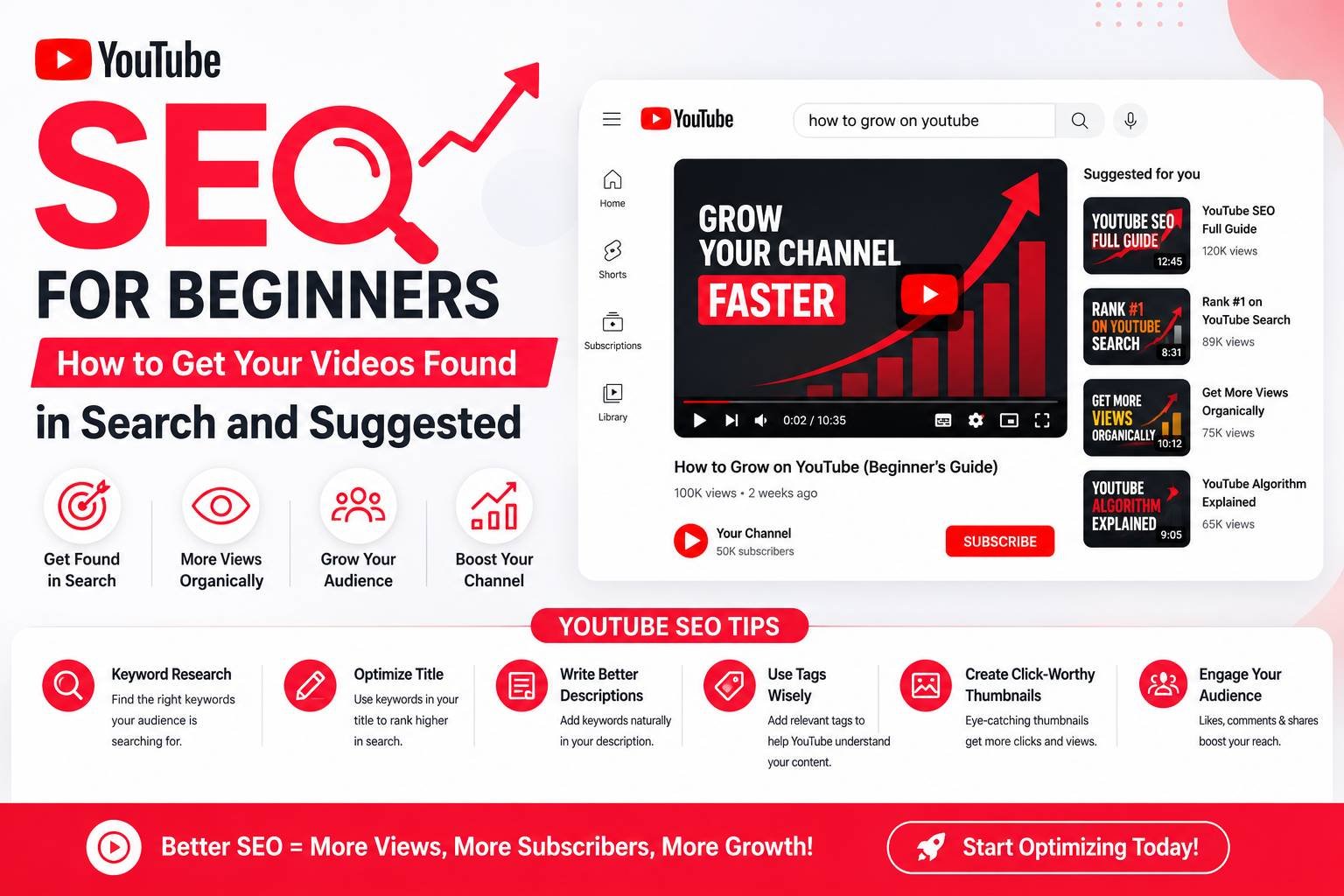
YouTube SEO for Beginners: How to Get Your Videos Found in Search and Suggested
Uploading a great video isn’t enough if nobody finds it. YouTube is the second-largest search engine in the world, and just like Google, it has its own ranking factors that determine which videos show up when someone searches a topic — or gets recommended one in their feed. For new creators, understanding a few core SEO principles early can make the difference between a video that gets buried and one that gains steady traction.
How YouTube’s Algorithm Actually Works
YouTube’s recommendation system optimizes primarily for watch time and viewer satisfaction — not just clicks. A video that gets a lot of clicks but loses viewers in the first 10 seconds signals to YouTube that the thumbnail or title overpromised, which actually hurts future recommendations. The goal isn’t just to get someone to click; it’s to keep them watching and satisfied enough to watch more from your channel afterward.
Title Optimization
Your title serves two audiences: YouTube’s search algorithm and actual humans deciding whether to click. Balance both:
- Include your target keyword naturally near the beginning of the title, since that’s what YouTube’s search matching weighs most heavily
- Keep it under 60 characters where possible so it doesn’t get cut off in search results or suggested video feeds
- Avoid keyword stuffing — a title crammed with search terms looks spammy and actually performs worse, since click-through rate matters too
Description Optimization
Many creators leave the description mostly empty, missing an easy SEO opportunity. A well-optimized description should:
- Include your main keyword within the first 1-2 sentences, since YouTube weighs the opening lines more heavily than text further down
- Provide a genuine 2-3 paragraph summary of what the video covers, not just a keyword list
- Include relevant links (your website, social channels, related videos) below the main summary
Tags: Less Important Than People Think, But Still Useful
Tags used to be a major ranking factor, but YouTube’s algorithm now relies far more heavily on titles, descriptions, and actual watch behavior. That said, tags still help YouTube understand context, especially for:
- Correcting for common misspellings of your main keyword
- Providing additional related terms that give the algorithm more context about your video’s topic
Don’t spend excessive time here — a handful of relevant tags is enough; it’s not the lever it once was.
Thumbnails: The Most Underrated SEO Factor
Thumbnails don’t directly affect search ranking the way titles do, but they heavily influence click-through rate, which does affect how often YouTube recommends your video afterward. A video with a strong topic but a weak, low-contrast, cluttered thumbnail will consistently underperform compared to a well-designed one, even with identical content.
Effective thumbnails typically use:
- Bold, high-contrast colors that stand out in a crowded suggested feed
- Minimal text (3-5 words maximum) that stays readable at small mobile sizes
- A clear focal point — usually a face with visible expression, or a single strong visual element
Watch Time and Retention Matter More Than Views
A common beginner mistake is chasing view count while ignoring audience retention — the percentage of a video viewers actually watch. YouTube’s analytics show a retention graph for every video, and sharp early drop-offs (in the first 15-30 seconds) are a strong signal to the algorithm that the video didn’t deliver on its title/thumbnail promise. Structuring your intro to get to the point quickly, rather than a long preamble, consistently improves retention.
Consistency and Upload Schedule
While there’s no strict rule requiring a specific upload frequency, channels that publish consistently (whether that’s weekly or biweekly) tend to build audience habits and give the algorithm more recent data to work with when deciding who to recommend the channel to. Sporadic, unpredictable uploading makes it harder for both the algorithm and your audience to build a habit around your content.
Playlists Help More Than Most Creators Realize
Grouping related videos into playlists keeps viewers watching multiple videos in a single session, which directly increases total watch time per viewer — one of YouTube’s most important ranking signals. A well-organized playlist structure (by topic, series, or skill level) makes it easy for a new viewer to keep watching after their first video.
A Simple Beginner SEO Checklist
- Keyword appears naturally in the title, near the start
- Description opens with a genuine 1-2 sentence summary containing the main keyword
- Thumbnail is high-contrast, minimal text, clear focal point
- Video intro gets to the point within the first 15 seconds
- Related videos are grouped into a playlist
Final Thoughts
YouTube SEO isn’t about gaming an algorithm — it’s about clearly communicating what your video is about (through titles and descriptions) while actually delivering a satisfying viewing experience that keeps people watching (through pacing, thumbnails, and content structure). New creators who focus on these fundamentals consistently see better discoverability than those chasing shortcuts like tag-stuffing or clickbait thumbnails that hurt retention.